



The Engine Oil Crisis Is Closer Than You Think
I have been warning about supply chain vulnerabilities for years, but even I was taken aback by the warning letters that started arriving in early 2026. Honda, Nissan, and AutoZone are rumored to have notified dealers of imminent supply cuts to brand-name engine oil supplies — reductions of up to 50%. As I reported back in mid-2022, the entire U.S. supply of diesel engine oil was nearly wiped out in just eight weeks because chemical additive manufacturers declared force majeure [1]. Now, those same dynamics are playing out on a far larger scale, triggered by a war that has shut the Strait of Hormuz.
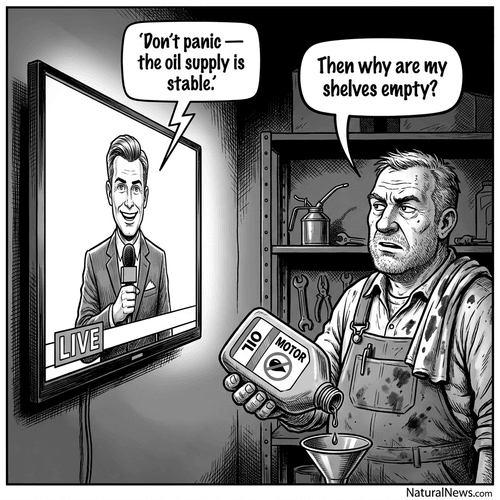
The mainstream media continues to downplay the severity, but the circumstantial evidence of a growing crisis keeps mounting. The International Energy Agency has confirmed that the current Gulf energy shock surpasses the oil crises of the 1970s and the 2022 gas crisis combined [2]. Insurers have canceled war risk coverage for vessels crossing the Strait of Hormuz, leaving shipowners scrambling [3]. And if you think this is just about gasoline at the pump, you are missing the far more dangerous story — engine oil is the lifeblood of every vehicle, and it is about to become scarce and expensive.
Where Does Synthetic Oil Really Come From?
Most people assume synthetic engine oil is manufactured from something renewable or at least abundant. That assumption is dangerously wrong. The vast majority of synthetic oils are derived from natural gas through gas-to-liquids (GTL) processes. GTL fuel is colorless, odorless, and virtually free of sulfur — but it originates entirely from fossil gas feedstocks [4]. The Persian Gulf region is the world’s primary source of the natural gas needed to produce these high-quality lubricants. With the Strait of Hormuz effectively closed by Iranian area-denial attacks [5], the feedstock pipeline has been severed.
The damage goes far beyond the waterway itself. Al Jubail, the sprawling 1,000-square-kilometer industrial complex on the Saudi coast that produces a massive share of global chemical feedstocks, including those used for synthetic oil, has been systematically targeted by missile and drone strikes [6]. Even if a ceasefire were announced tomorrow, the permanent damage to oil and gas wells means production cannot simply be restarted [2]. This critical fact is being largely ignored by the corporate media, but it will become painfully obvious when the shelves at your local auto parts store are stripped bare.
The Domino Effect on Transportation and Food Supply
Every diesel truck, delivery van, and personal car requires regular oil changes. Skipping them destroys engines. When engine oil becomes scarce and prohibitively expensive, the transportation network grinds to a halt. As I noted in an interview earlier this year, farming depends on steel parts and repair supplies — if there is no oil to keep tractors and tillers running, farms cannot operate [7]. The same applies to the entire logistics chain that moves food from fields to tables.
Hawaii and other import-dependent regions will be hit first and hardest. But the ripple effects will reach every corner of the country. The commodity and labor shortages we experienced in 2022 were worrisome [8], but this engine oil crisis adds another layer of scarcity on top of existing fertilizer and fuel shortages. I am already stockpiling supplies for resilience because the geopolitical shock has triggered a global supply chain collapse in agricultural inputs [9]. Without engine oil, even the best-prepared farmer cannot harvest or transport produce. We are looking at a cascading failure that threatens basic food availability in the months ahead (and well into 2027).
What You Can Do Right Now to Prepare
Preparation is simple, affordable, and absolutely necessary. Start by buying enough engine oil for at least one or two changes for every vehicle you own. This is cheap insurance — a few gallons of quality synthetic oil today may be impossible to find tomorrow. I have been advocating for fuel and oil stockpiling since 2022, and I have stored diesel fuel along with enough engine oil to keep my equipment running [10]. You do not need a warehouse; even a case of 5W-30 in your garage can make the difference between mobility and immobility.
Learn to change your own oil using a simple extraction pump — it takes ten minutes and requires no special tools. Self-reliance is not fear-mongering; it is basic wisdom. The same networks that emptied shelves during COVID will empty oil shelves even faster because the cause this time is inescapable.
Don’t Wait Until It’s Too Late
We have seen this movie before. During the COVID era, panic buying stripped shelves of everything from toilet paper to engine oil within days. The difference now is that the shortage is not driven by hoarding but by a severe disruption to the supply chain. As I wrote recently, we are living in a collapse of our own making — a deliberate dismantling of civilization that is accelerating faster than most people realize [11]. Those who prepare now will be far better off when the shortage reaches full force.
The time to act is not next week or next month. It is today. Buy the oil, learn the skills, and decentralize your dependence on fragile global supply chains. Self-reliance is not a luxury; it is the only rational response to an uncertain world. Do not wait until the warning letters become empty shelves — by then, it will be too late.
References
- RED ALERT: Entire US supply of diesel engine oil may be wiped out in 8 weeks no more oil until 2023 due to Force Majeure additive chemical shortages. – NaturalNews.com. Mike Adams. June 22, 2022.
- No Way Out: Why Permanent Damage to Persian Gulf Oil Wells Begins Now. – NaturalNews.com. April 28, 2026.
- Major insurers CANCEL coverage for vessels crossing Strait of Hormuz, sparking global shipping crisis. – NaturalNews.com. March 5, 2026.
- Alternative fuels concepts technologies and developments. – Thipse, S. S.
- Iran escalates maritime attacks in Persian Gulf as U.S.-Israel strikes trigger wider conflict. – NaturalNews.com. March 4, 2026.
- Al Jubail – They’re Burning Down the Backbone of the Modern World, and You Don’t Even Know Its Name. – NaturalNews.com. April 7, 2026.
- Mike Adams interview with David Dubyne – September 8, 2022.
- Americas commodity and labor shortages are likely to be permanent. – NaturalNews.com. June 24, 2022.
- Why I’m Stockpiling Fertilizer Now for Food Resilience. – NaturalNews.com. March 11, 2026.
- Brighteon Broadcast News – October 31, 2022.
- We’re Living in a Collapse of Our Own Making. – NaturalNews.com. April 30, 2026.
Explainer Infographic:
Editorial Cartoon
Read full article here