


MADISON, WI — A sweeping firearms bill introduced in the Wisconsin State Assembly aims to eliminate the requirement for a concealed carry permit, effectively making Wisconsin a constitutional carry state. Assembly Bill 609 (AB609), introduced by Representative Green and a coalition of Republican lawmakers, is currently under review by the Assembly Committee on State Affairs.
If passed, AB609 would repeal the existing general prohibition on carrying a concealed weapon without a license. Instead, the bill affirms the right of any individual legally allowed to possess a firearm under federal law to carry it concealed without obtaining a permit from the Wisconsin Department of Justice (DOJ). The option to obtain a concealed carry license would remain for those seeking reciprocity in other states or wishing to carry in federal school zones.
AB609 also proposes significant changes to current firearm-related statutes, including:
- Repeal of numerous concealed carry license provisions: Background check standards, training mandates, revocation procedures, and restrictions based on certain state-level prohibitions would be removed.
- Uniform penalties for carrying in prohibited places: Current law distinguishes penalties based on whether or not a person holds a concealed carry license. AB609 would eliminate this distinction, making any violation of restricted-location carry a Class A misdemeanor regardless of licensure status.
- Expanded list of restricted areas: The bill maintains restrictions on carrying in specific locations such as police stations, correctional facilities, and certain courtrooms, while also adding “nuisance” properties and federally prohibited areas to the list.
- Changes to hunting distance regulations: The required distance for hunting near schools, hospitals, or sanatoriums would be reduced from 1,700 feet to 1,200 feet.
- Removal of restrictions on loaded long guns in vehicles: Current state law only allows handguns to be loaded in vehicles. AB609 would permit all firearms to be loaded, regardless of type.
- Clarifications on property and employment rights: The bill maintains employers’ rights to restrict firearm possession during employment but prohibits policies that ban employees from keeping firearms or ammunition in their own vehicles.
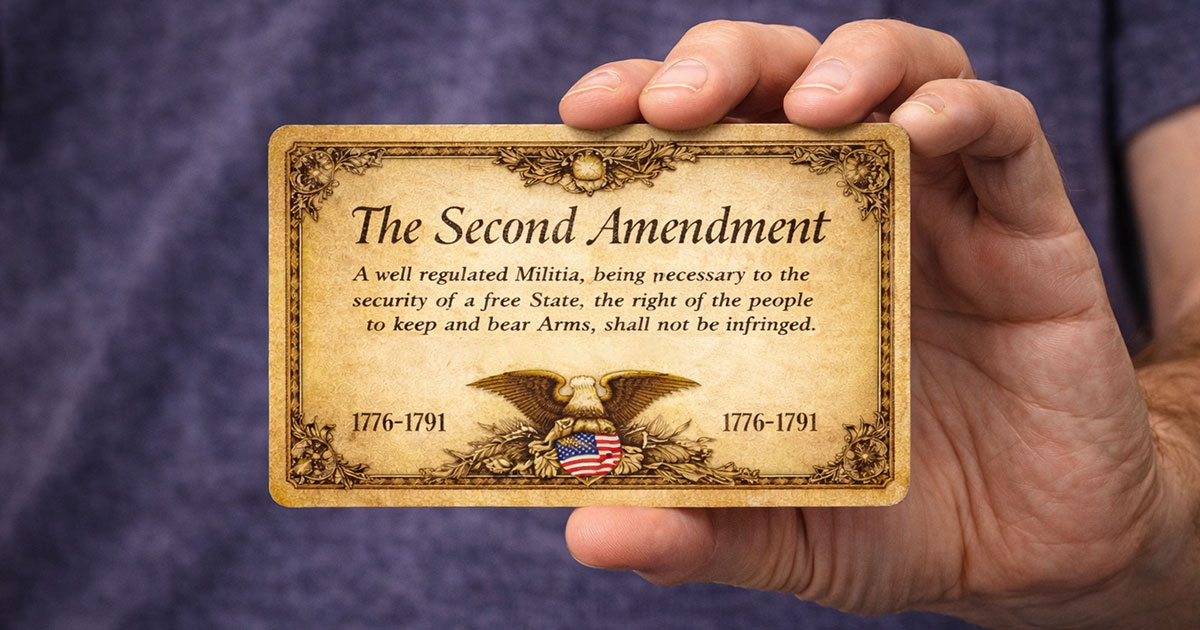
If passed, this legislation brings Wisconsin’s laws in line with constitutional carry principles already adopted in more than half the U.S. states. It simplifies firearms laws, removes unnecessary bureaucratic hurdles, and restores rights protected under the Second Amendment.
Critics, however, express concern over the removal of state-level background check requirements and the potential public safety implications of unlicensed carry without mandatory training. While these concerns are often raised in debates over constitutional carry, they have not materialized in the majority of states that have already adopted similar laws. Currently, more than half of the United States allow permitless concealed carry, and there is no conclusive evidence showing a rise in violent crime as a direct result. Law-abiding gun owners remain responsible for understanding and following the law, and federal prohibitions on firearm possession by prohibited persons still apply regardless of state permit requirements.
While AB609 does not alter federal firearm restrictions or the Gun-Free School Zones Act, it seeks to better align Wisconsin’s statutes with federal allowances, particularly for individuals possessing a valid concealed carry license recognized under federal law.
The bill was introduced on October 29, 2025, and has since seen a public hearing and the offering of an amendment by Rep. Green on January 15, 2026. Its progress through committee will determine whether it advances for a full Assembly vote.
AB609 represents a continued legislative push by pro-Second Amendment lawmakers to reduce regulatory barriers for lawful gun owners. Its emphasis on aligning state and federal standards reflects a broader trend toward strengthening the rights of responsible citizens to carry without government-issued permission.
Read full article here