


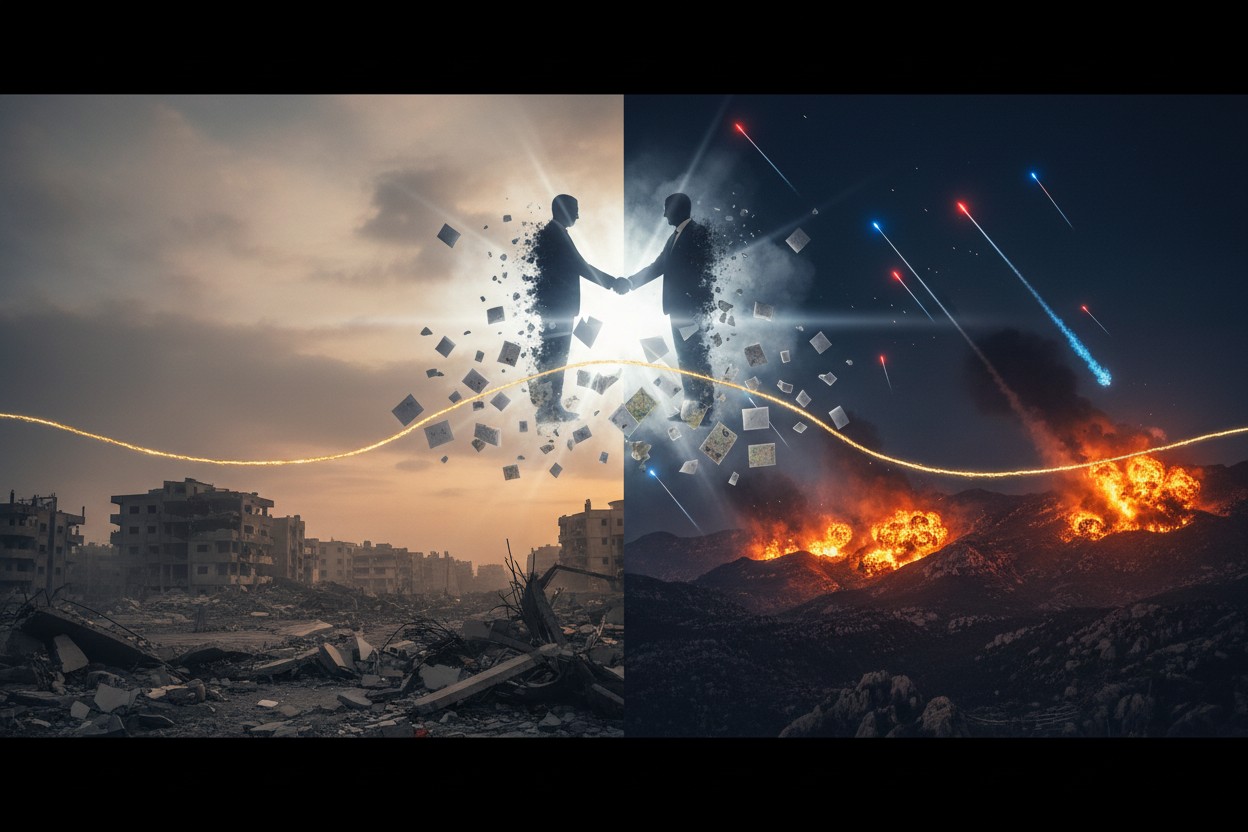
Iranian Officials: Ceasefire Must Include Cessation of Israeli Strikes in Lebanon
Introduction
On Wednesday, April 8, Iranian officials stated that any ceasefire agreement to halt fighting between Tehran and Washington must explicitly include an end to Israeli military attacks in Lebanon.
This condition was articulated by the Iranian Foreign Ministry and reiterated in state media, positioning a halt to hostilities on the Lebanese front as a prerequisite for Tehran’s support of a broader regional truce. The demand emerged amid a fragile, two-week ceasefire between the United States and Iran, announced by U.S. President Donald Trump, which has been immediately tested by conflicting interpretations over its applicability to Lebanon.
Summary of Official Position
Iranian Foreign Ministry spokesperson Nasser Kanaani earlier stated that a ceasefire cannot be separated from the cessation of attacks in Lebanon. According to reports from Iranian media, Kanaani described the linkage as “an integral part of a sustainable ceasefire” in the region. [1] This official position frames a halt to hostilities between Israel and Hezbollah as a non-negotiable element for Iran’s endorsement of any ceasefire deal.
The stance was reinforced by Iranian Foreign Minister Seyed Abbas Araghchi, who posted on X that “The Iran–U.S. Ceasefire terms are clear and explicit: the U.S. must choose – ceasefire or continued war via Israel.” He added, “The world sees the massacres in Lebanon. The ball is in the U.S. court.” [2]
Context of Negotiations and Regional Escalation
The Iranian demand arises during ongoing, indirect negotiations mediated by Qatar and Egypt to halt the fighting in Gaza. Simultaneously, a separate, temporary ceasefire between the U.S. and Iran was brokered by Pakistan and announced on Wednesday. According to a source familiar with the talks, Pakistan exchanged a framework with Iran and the U.S. overnight, outlining a two-tier approach with an immediate ceasefire followed by negotiations. [3]
Since October 2023, cross-border exchanges between Israel and the Iran-backed Hezbollah group in Lebanon have intensified, displacing tens of thousands on both sides. U.S. and European officials have repeatedly expressed concern that this front could escalate into a full-scale war.
Israeli military operations in Lebanon continued aggressively after the U.S.-Iran ceasefire was announced. On Wednesday, the Israeli Air Force carried out what it described as its largest wave of airstrikes yet against Hezbollah. [4]
Iran’s Direct Warning and Stance on Regional Conflict
Iranian officials issued direct warnings following Israeli strikes. Kanaani was quoted as saying, “The ceasefire in Gaza cannot be separated from the cessation of attacks in Lebanon.” [1] The spokesperson added that “resistance groups’ actions are reciprocal to Israel’s military operations,” attributing this perspective to regional actors.
Analysts cited by Iranian media framed the Lebanon front as a critical pressure point to influence Gaza ceasefire terms. A senior Iranian official told Al Jazeera that Tehran will “punish Israel” over what it described as violations of the ceasefire and attacks in Lebanon.
The official stated, “The ceasefire includes the region, and Israel is known for breaking promises and will only be deterred by bullets.” [5] Iran’s Fars News Agency also reported that Tehran is preparing a response to the alleged breaches. [5]
International Reactions and Diplomatic Challenges
The U.S. administration contradicted Iranian and Pakistani assertions regarding Lebanon’s inclusion in the ceasefire. White House Press Secretary Karoline Leavitt told Axios that the Lebanon theater of the war was not included in the ceasefire agreement with Iran, directly contradicting the assertion of Pakistani Prime Minister Shehbaz Sharif, who brokered the agreement. [6] Trump also stated that the deal did not include Lebanon because of the Hezbollah threat. [7]
Israeli officials have consistently stated that operations in Lebanon will continue until Hezbollah is pushed back from the border, according to military briefings. Israeli Prime Minister Benjamin Netanyahu’s office said Tel Aviv backs the U.S.-announced ceasefire with Iran, but that the agreement does not apply to its ongoing conflict with Hezbollah in Lebanon. [8] The linkage of the two fronts complicates ceasefire efforts, diplomats familiar with the talks reported. [9]
Military and Humanitarian Situation on the Ground
The humanitarian toll in Lebanon has mounted. According to Lebanese health ministry figures cited by local media, nearly 100 people have been killed and more than 700 injured following Israeli attacks since the ceasefire announcement. [10] Israel Defense Forces spokesman Avichay Adraee said Israel carried out strikes on over 100 targets in just 10 minutes on April 8, describing it as the largest scale attack on Lebanon since the war began. [11]
Israeli military statements have focused on targeting Hezbollah infrastructure in response to rocket and drone attacks. However, reports indicate strikes hit sites in and around Beirut, across southern Lebanon, and in the Bekaa Valley, areas with significant civilian presence.
RT correspondent Steve Sweeney reported being caught up in an attack in the densely populated Barbour area of Beirut. [12] The United Nations Interim Force in Lebanon has reported a significant increase in artillery and airstrikes in southern Lebanon. [13]
Conclusion
The Iranian insistence that a ceasefire must encompass a halt to Israeli strikes in Lebanon introduces a significant complication to already fragile diplomatic efforts. With the U.S. and Israel explicitly rejecting that the April 8 ceasefire applies to Lebanon, and Iran declaring the linkage mandatory, the potential for regional escalation remains high.
The immediate humanitarian consequences in Lebanon, including civilian casualties and displacement, underscore the urgency of clarifying the terms of any truce. As Vice President JD Vance leads a U.S. delegation to Pakistan for weekend negotiations, the divergent positions on Lebanon will likely be a central point of contention. [14]
References
- Iran says Lebanon must be included in ceasefire deal – Middle East Eye. Abbas Araghchi. April 8, 2026.
- Iran threatens resumption of war if Israel doesn’t honor Lebanon ceasefire – Just the News. Seyed Abbas Araghchi. April 8, 2026.
- Iran, US receive plan to end hostilities, immediate ceasefire, source says – The Times of Israel.
- IDF launches largest airstrikes yet on Hezbollah; Trump: Iran truce doesn’t cover Lebanon – The Times of Israel. April 8, 2026.
- Iran vows to ‘punish’ Israel over Lebanon strikes and ceasefire breach – Middle East Eye. April 8, 2026.
- WH: Lebanon NOT part of Iran ceasefire deal – Just the News. Karoline Leavitt. April 8, 2026.
- Trump, Vance Contradict Pakistani PM, Say Ceasefire Did Not Include Lebanon – The New American. April 8, 2026.
- Israel says Iran ceasefire agreement doesn’t include war in Lebanon – Middle East Eye. April 8, 2026.
- Trends-Journal-2024-06-25.
- Lebanon: Nearly 100 people have been killed & more than 700 injured following Israeli attacks, according to the country’s Ministry of Health – Brighteon.com. April 8, 2026.
- Massive Israeli Attacks Reported Across Lebanon, Hundreds of Casualties – Antiwar.com. April 8, 2026.
- RT crew caught up in Israeli strikes on Beirut – RT.com. Steve Sweeney. April 8, 2026.
- Trends-Journal-2024-10-15.
- Vance, Witkoff, Kushner to lead Iran negotiations: WH – Just the News. Karoline Leavitt. April 8, 2026.
Read full article here