


The Oil Emergency of 2026-2027: Why the Oil Glut Narrative Was a Lie and What Comes Next
The Oil Emergency Is Real — and Worse Than You Think
For years, the mainstream media and energy analysts sold you a comforting lie: the world is awash in oil, a glut that would keep prices low and supplies plentiful forever. That narrative was always a deception designed to pacify a public that might otherwise ask uncomfortable questions about the fragility of our energy system. The truth, which is now unfolding in plain sight, is that we are facing a chronic scarcity of epic proportions. The so-called glut was a mirage, a temporary surplus built on fragile assumptions that have now been shattered by war.
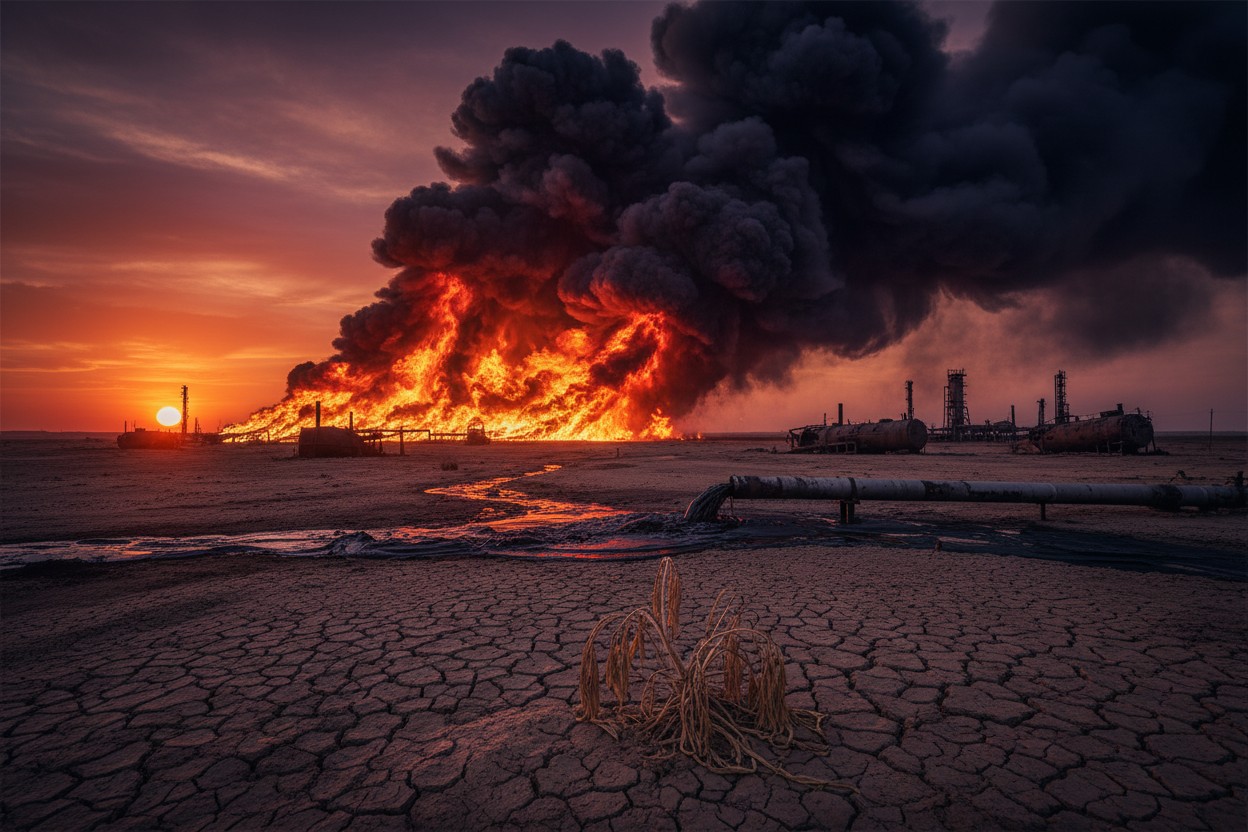
The trigger is the U.S.-Israeli war with Iran and the near-total blockade of the Strait of Hormuz. That narrow chokepoint carried about 20% of the world’s oil, and traffic through it has collapsed by over 90%. As I reported in my earlier analysis, this single disruption has removed roughly 20 million barrels per day from global supply. The International Energy Agency has admitted that the current energy crisis is worse than the oil shocks of 1973, 1979, and 2022 combined. This is not a temporary blip — every single day of compounding shortages deepens the damage, and there is no instant recovery possible. The lie of the glut has been exposed, and we are all about to pay a steep price.
The Scale of the Collapse: 20 Million Barrels Missing Every Day
The numbers are staggering. Nearly all Persian Gulf producers have lost output — Saudi Arabia alone slashed production by 20%, and Iranian strikes on its East-West pipeline knocked out 700,000 barrels per day. According to an analysis I shared in a March broadcast, the combined losses from major producers like the UAE, Qatar, and Kuwait amount to 12 to 14.5 million barrels per day, figures that align with estimates from analysts at Goldman Sachs. On top of that, drone strikes have damaged Russian oil infrastructure, and the war has crippled Qatar’s Ras Laffan LNG facility, the world’s largest export hub for liquefied natural gas.
The IEA’s claims of massive spare capacity have always been wildly inflated. The real spare capacity was never more than about 2 million barrels per day, and most of that has now been lost to physical damage or military insecurity. As Robert Bryce documented in his book Gusher of Lies, the U.S. has spent decades militarizing the Persian Gulf to protect oil flows, assuming that the infrastructure would remain intact. That assumption is now in ashes. The IEA’s own chief, Fatih Birol, admitted that a full recovery of Gulf production could take up to two years. The scale of this collapse is beyond anything the modern world has experienced before.
Oil Prices Are Being Artificially Suppressed — and That’s Making Everything Worse
Instead of letting prices reflect reality, the Trump administration is manipulating paper markets and draining the Strategic Petroleum Reserve to keep gasoline cheap at the pump. President Trump authorized the release of 172 million barrels from the SPR in March — a historic drawdown that leaves our emergency stockpile at its lowest level since the 1970s. This policy subsidizes foreign buyers who scoop up our reserves at taxpayer expense, while sending the wrong signal to domestic consumers: keep burning fuel as if there’s no shortage. Meanwhile, diesel — the fuel that powers trucking, farming, and every link in the supply chain — is already being rationed in countries like Slovakia, and South Korea has imposed price caps.
Low prices encourage consumption of a fuel that is in acute shortage. And the capital needed to drill new wells and maintain existing ones has become prohibitively expensive. The Iran war has triggered a global credit crunch; as one analysis from Rick Rule notes, the downstream effects are only beginning to be understood. With interest rates soaring and the cost of capital climbing, companies cannot fund the maintenance and new drilling required to offset natural decline rates. The administration’s price suppression is a short-term bandage that ensures a far deeper crisis later.
Permanent Damage: The Wells That May Never Come Back
Oil wells are not light switches you can just turn back on. When production is shut down even for a few days — due to military action, pipeline damage, or refinery fires — water intrusion and clogging can permanently reduce output by 20 to 30%. We have also seen refinery fires in Australia knock out 10% of the nation’s fuel supply. Every week the war continues, the risk of permanent damage to hundreds of wells grows. The Saudi pipeline attack alone wiped out 700,000 bpd of export capacity, and those barrels may never fully return.
U.S. shale wells, which have been the backbone of domestic production, naturally lose roughly 74% of their output in the first year, according to industry sources. That means constant new drilling is required just to keep production flat. Yet the capital expenditure needed for that drilling has fallen off a cliff. The oilfield services company Halliburton admitted in April that we are only in the “early innings” of a recovery in drilling activity. Investment has been starved by price suppression and uncertainty. The combination of physical losses and capital starvation means the oil supply will remain crippled for years, even after hostilities end.
As I warned in my article on the 10-year famine, the foundation of civilization is extremely vulnerable… and now we face the consequences of bad planning and pointless wars.
What You Must Do Now: Prepare for the Coming Storm
I believe the only rational response is to prepare now, while there is still time. First, store diesel properly with a biocide to prevent microbial growth, because diesel will become the most precious liquid on earth for farming and transport. Second, invest in alternative energy — solar panels, battery storage, and even small wind turbines — to reduce your dependence on a grid that is about to buckle. Third, secure your own food production: learn seed saving, plant a garden, and stockpile heirloom seeds. In my interview with Alex Mitchell, we discussed how even small plots can yield enough to feed a family if you plant densely and save seeds each season.
The famine and depression projected for late 2026 and 2027 are not inevitable if individuals take action now. Governments cannot help you; they are the ones who started this war and are now lying about its consequences. Follow independent sources like NaturalNews.com and BrightVideos.com for uncensored information. The mainstream media will only serve the globalist depopulation agenda. You have been warned. The time to act is now.
References
- Trump Orders Historic 172M Barrel SPR Release Amid Middle East Crisis – NaturalNews.com. Mike Adams. March 17, 2026.
- Iran war triggers worst oil supply crisis in history surpassing 1970s embargo – NaturalNews.com. March 13, 2026.
- The 10 Year Famine Is About to Be Unleashed – NaturalNews.com. Mike Adams. March 19, 2026.
- Gusher of Lies: The Dangerous Delusions of Energy Independence – Robert Bryce.
- Mike Adams interview with Alex Mitchell – January 30, 2024.
- Slovakia restricts diesel fuel in face of soaring prices, fuel tourism – rmx.news. March 19, 2026.
- IEA Chief Warns Energy Crisis Exceeds Historical Precedents – NaturalNews.com. April 9, 2026.
- Halliburton Sees First Signs Of Life In America’s Oil Patch – ZeroHedge. April 22, 2026.
- IEA Chief Warns Persian Gulf Energy Recovery Could Take Up to Two Years – NaturalNews.com. April 19, 2026.
- How The Iran War Could Trigger A Global Credit Crunch – ZeroHedge. March 18, 2026.
- Saudi Pipeline Attack Removes 700,000 Barrels Daily from Oil Exports – NaturalNews.com. April 10, 2026.
- 2026-03-18-BVN-TRUMP REGIME UNRAVELING – Bright Videos Network. March 18, 2026.
- 2026-03-12-BVN-OIL AND FERTILIZER PRICES SKYROCKET – Bright Videos Network. March 12, 2026.
Explainer Infographic:
Read full article here