


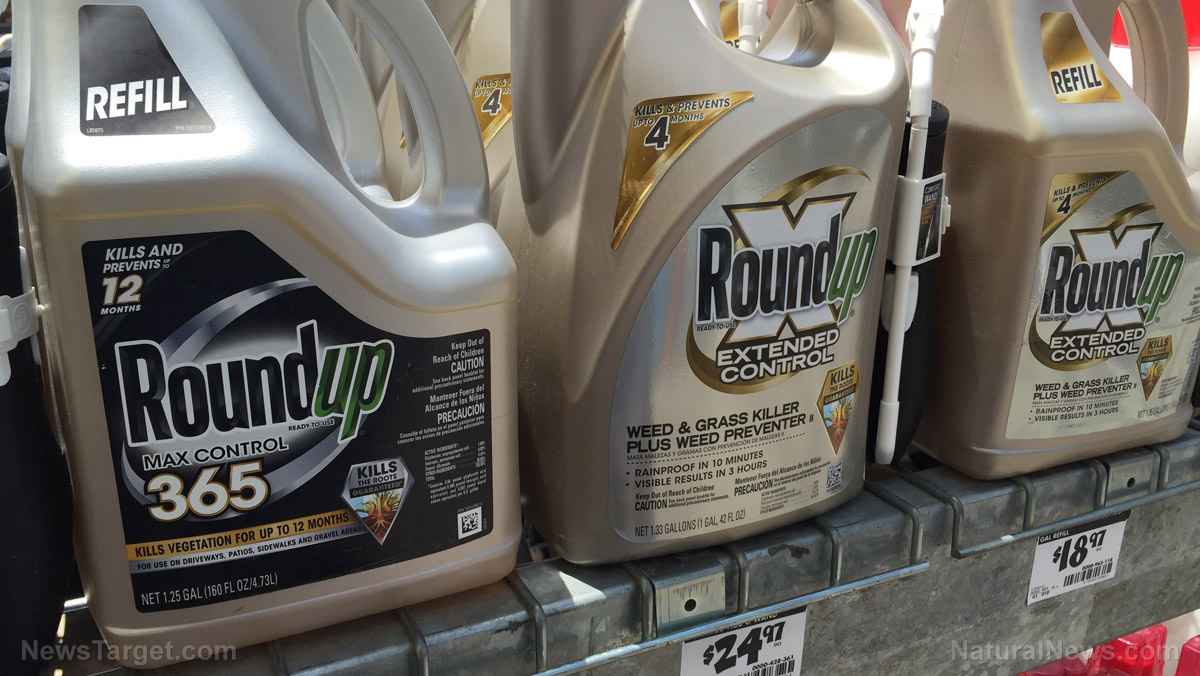
Big Chem’s playbook: Pesticide giants seek legal immunity as cancer links mount
- Pesticide manufacturers are lobbying state legislatures for “liability shield” laws to block lawsuits from people harmed by their products.
- Glyphosate, the active ingredient in Roundup, has been classified as “probably carcinogenic to humans” by the World Health Organization.
- More than 65,000 lawsuits have been filed against Bayer over Roundup, with settlements exceeding $12 billion.
- The U.S. Supreme Court is expected to rule in July 2026 on whether federal law preempts state-level failure-to-warn claims against pesticide makers.
- Georgia and North Dakota have already passed liability shield laws; similar bills are pending in other states.
The battle for accountability
The pesticide industry is mounting a coordinated campaign to secure legal immunity for harm caused by its products, following a playbook pioneered by vaccine manufacturers and raising urgent questions about corporate accountability, public health and the right to sue. With the U.S. Supreme Court poised to rule this summer on a pivotal case that could reshape the legal landscape for agricultural chemicals, state legislatures have become the latest battleground. Pesticide companies are pushing bills that would shield them from “failure to warn” lawsuits—claims that manufacturers did not adequately disclose cancer risks associated with products like Roundup. The stakes are existential for affected communities and significant for the nation’s food supply.
A geographic pattern of harm
The connection between heavy pesticide use and elevated cancer rates is no longer anecdotal. An analysis of federal data reveals that among the 500 U.S. counties with the highest pesticide application per square mile—concentrated in corn, soybean and fruit-producing states including Iowa, Illinois, Missouri, California and Florida—60% report cancer rates exceeding the national average of 460 cases per 100,000 people.
A 2024 study published in Frontiers in Cancer Control and Society delivered a stark finding: the impact of pesticide use on cancer incidence may rival that of smoking. Researchers who analyzed county-level data using latent-class pesticide use patterns found significant associations between agricultural chemical exposure and increased rates of leukemia, non-Hodgkin’s lymphoma, bladder cancer, colon cancer, lung cancer and pancreatic cancer. The study’s authors emphasized that these findings warrant urgent policy reconsideration.
The legal toll mounts
The courtroom record against agrichemical companies is substantial. Bayer, which acquired Monsanto and its Roundup product line, has faced more than 65,000 lawsuits from farmers, gardeners and other users alleging glyphosate caused their cancer. The company has paid more than $12 billion in settlements, including individual jury verdicts such as an initial $2 billion award in California and a $1.25 million verdict in Missouri.
The World Health Organization’s International Agency for Research on Cancer classified glyphosate as “probably carcinogenic to humans.” Despite this designation, Bayer and other manufacturers have continued to contest liability, arguing that U.S. Environmental Protection Agency determinations that glyphosate is unlikely carcinogenic should preempt state-level claims.
The immunity strategy
In response to mounting legal defeats, pesticide companies have aggressively lobbied for state-level “liability shield” laws. These bills would effectively void state-level failure-to-warn claims by asserting that because the EPA has not warned of a cancer link, state courts cannot impose such obligations. Georgia and North Dakota have already passed these laws. Similar legislation is pending in multiple other states.
The industry’s strategy mirrors protections granted to vaccine manufacturers under the National Childhood Vaccine Injury Act, which shields companies from liability for vaccine-related harms. Critics argue this approach would deny justice to individuals harmed by pesticides while removing financial incentives for manufacturers to improve product safety.
A Supreme Court showdown
The U.S. Supreme Court heard arguments in April 2026 in Monsanto v. Durnell, a case that could determine whether federal law preempts state courts from requiring cancer warning labels or awarding damages through state juries. The justices appeared split during oral arguments. A decision is expected in July.
The case arrives amid unusual political crosscurrents. The Trump administration sided with Bayer during oral arguments, and President Trump signed an executive order declaring glyphosate critical to national security. Meanwhile, the “Make America Healthy Again” movement has created unexpected alliances between environmentalists and conservative health advocates. In April, the House voted to remove a pesticide industry-backed provision from its farm bill, though the Senate has yet to draft its version.
The bottom line
The convergence of state-level immunity bills and a pending Supreme Court ruling creates a watershed moment for pesticide regulation and corporate accountability. If liability shield laws become widespread, individuals harmed by pesticides may lose their primary avenue for seeking compensation—and manufacturers may face reduced incentive to warn consumers of potential dangers. The evidence linking glyphosate to cancer continues to accumulate, but the legal framework for addressing those harms hangs in the balance. For communities in agricultural regions bearing the highest chemical exposures, the outcomes of these legislative and judicial battles will carry life-or-death consequences that extend far beyond the courtroom.
Sources for this article include:
ChildrensHealthDefense.org
DocumentCloud.org
CapitolNewsIllinois.com
Read full article here