


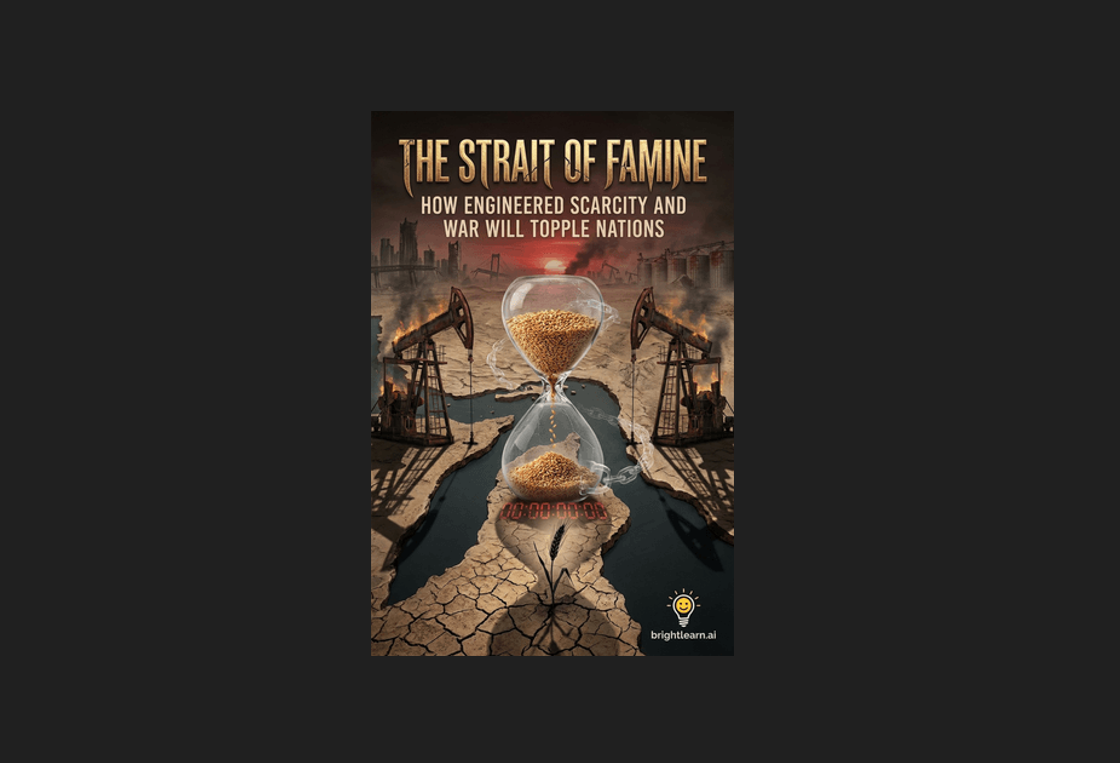
- Famines, wars and pandemics are deliberately orchestrated events designed by globalist elites to concentrate power, reduce human freedom and enact depopulation, rather than being random calamities or natural occurrences.
- The global food supply is controlled through engineered “chokepoints” (like the Strait of Hormuz and Suez Canal) and synchronized “Three Sisters of Total War” (pandemic, famine and war)—where COVID-19 was a dry run for control and the Ukraine war was a calculated disruption of fertilizer/grain supplies.
- “Slow famines” are being engineered by design in Africa and Latin America through policy choices that prioritize corporate profit over human life, mirroring historical genocidal famines like the Irish Potato Famine and the Soviet Holodomor.
- Leadership is deceptive, using deepfake technology, false flag operations and “stunning and swooping” (non-lethal explosives to fake collateral damage) to justify wars and crackdowns while hiding the true orchestrators.
- A practical path forward requires abandoning fiat currency, safeguarding heirloom seeds, building community mutual aid networks and growing “stealth gardens” to break free from the centralized control system that is deliberately engineering scarcity and famine.
“The Strait of Famine: How Engineered Scarcity and War Will Topple Nations” offers something valuable: a coherent, meticulously argued case that the famines, wars and pandemics we are witnessing are not random calamities but deliberately orchestrated events designed to concentrate power and reduce human freedom.
Reading this book feels like watching a master detective lay out evidence that has been hiding in plain sight. The author, drawing extensively on the work of investigative journalist Mike Adams and other alternative analysts, connects dots that mainstream media refuses to acknowledge. The result is a worldview that is unsettling precisely because it makes so much sense.
The book’s central thesis is that we are not stumbling into crisis—we are being pushed. The authors introduce the concept of “chokepoints”—physical, resource and ideological bottlenecks that globalist elites have spent decades creating and controlling. The Strait of Hormuz, through which one-fifth of the world’s oil passes. The Suez Canal, carrying 12 percent of global trade. The Haber-Bosch process, that single chemical reaction that feeds half of humanity. These are not independent vulnerabilities; they are deliberately maintained pressure points that can be squeezed at will.
What makes this book different from typical doomsday literature is its historical grounding. The authors trace the pattern back to the Bronze Age Collapse, through the Irish Potato Famine, the Soviet Holodomor and the Bengal famine of 1943. In each case, the story is the same: food was available, but policy choices—often explicitly genocidal in intent—prevented it from reaching those who needed it. The Irish starved while ships loaded with grain left their ports for England. The Ukrainians starved while Soviet authorities confiscated every kernel of wheat. These are not cautionary tales from the distant past; they are templates being deployed today.
The three sisters of death
Perhaps the most powerful conceptual framework in the book is what the authors call the “Three Sisters of Total War”—pandemic, famine and war—which they argue are not merely coincidental companions but deliberately synchronized events. COVID-19 was not an accident but a dry run for lockdown protocols, vaccine mandates and digital tracking. The war in Ukraine was not a tragic eruption but a calculated disruption of fertilizer and grain supplies. The looming famine in the Horn of Africa is not a natural disaster but an engineered outcome of policies that prioritize corporate profit over human life.
The chapter on “slow famines” is particularly devastating. Unlike the sudden, televised famines that prompt international aid campaigns, slow famines creep in quietly—season after season of small deficits that compound into generational catastrophe. Children grow weaker. Soils grow poorer. Communities fray. By the time the world notices, the damage is irreversible. This is precisely what is happening across broad swaths of Africa and Latin America right now and the book makes a compelling case that it is happening by design.
The deception of leadership
One of the book’s most provocative sections deals with what it calls “the great deception of leadership.” The authors explore the mysterious disappearance of Benjamin Netanyahu, the use of deepfake technology to manufacture “proof of life” videos and the long history of false flag operations that have been used to justify wars and crackdowns. The “Baghdad Bob effect”—named after Saddam Hussein’s information minister who declared victory while American tanks rolled into Baghdad—is shown to be a standard operating procedure for governments that have lost touch with reality.
The chapter on “stunning and swooping”—the technique by which special forces capture high-value targets using non-lethal explosives that make the operation look like collateral damage—reads like something from a Tom Clancy novel. But the authors provide enough documented cases to make you wonder how many “accidental” explosions in conflict zones are actually targeted extractions.
A practical path forward
What elevates “The Strait of Famine” above mere conspiracy theory is its practical focus. The final chapters offer concrete strategies for survival and resistance. The “stealth garden”—growing food in hidden, overlooked patches of land using ancient techniques like the Three Sisters planting method—is a brilliant response to a system that would control every calorie. The call to safeguard heirloom seeds as “the ultimate act of resistance against corporate seed extinction” is both poetic and urgent.
The section on “abandoning the dollar” is a masterclass in economic survival. Gold and silver, the authors argue, are not speculative investments but essential tools for preserving wealth when fiat currencies collapse. They offer practical advice on acquiring small denominations for trading, testing for counterfeits and building a barter network before you need it.
Most importantly, the book emphasizes that survival is not just about stockpiling supplies but about building community. Mutual aid networks, time banks and local food hubs are presented not as utopian ideals but as practical necessities in a world where central systems have become weapons of control.
This is not a book for the faint of heart. It will challenge your assumptions about everything from the COVID-19 pandemic to the war in Ukraine to the food on your table. It will make you angry—angry at a system that has been lying to you and angry at yourself for not seeing it sooner. But it will also equip you with the knowledge and tools to do something about it.
The authors write with the urgency of people who know the window is closing. They cite Mike Adams’ warnings that the Strait of Hormuz closure alone could trigger famine across three continents. They document the deliberate dismantling of local food systems in favor of centralized, fragile supply chains. They show how digital currencies and digital IDs are being positioned as the “mark of the beast”—not in some distant apocalyptic future, but in legislation being drafted today.
“The Strait of Famine” is not without its flaws. It is dense, repetitive in places and assumes a preexisting skepticism toward mainstream narratives that some readers may not share. The sourcing, while extensive, relies heavily on alternative media that will be dismissed by establishment gatekeepers. But that is precisely the point. When the official story is a lie, the truth must come from elsewhere.
In the end, this book is a call to wake up. The famine is not coming—it is already here. The war is not on the horizon—it is being fought in the fields and shipping lanes and digital networks that sustain our lives. The choice, as the authors make clear, is not whether to prepare but how. You can continue to trust the system that is killing you or you can start planting seeds—literal and metaphorical—for a world that values honor, truth and liberty over control.
Grab a copy of “The Strait of Famine: How Engineered Scarcity and War Will Topple Nations” via this link. Read, share and download thousands of books for free at Books.BrightLearn.AI. You can also create your own books for free at BrightLearn.AI.
Watch the video below where Michael Yon talks to Mike Adams about the Hormuz crisis, global famine risk and the collapse of Middle East stability.
This video is from the Health Ranger Report channel on Brighteon.com.
Sources include:
Books.BrightLearn.ai
BrightLearn.ai
Brighteon.com
Read full article here