


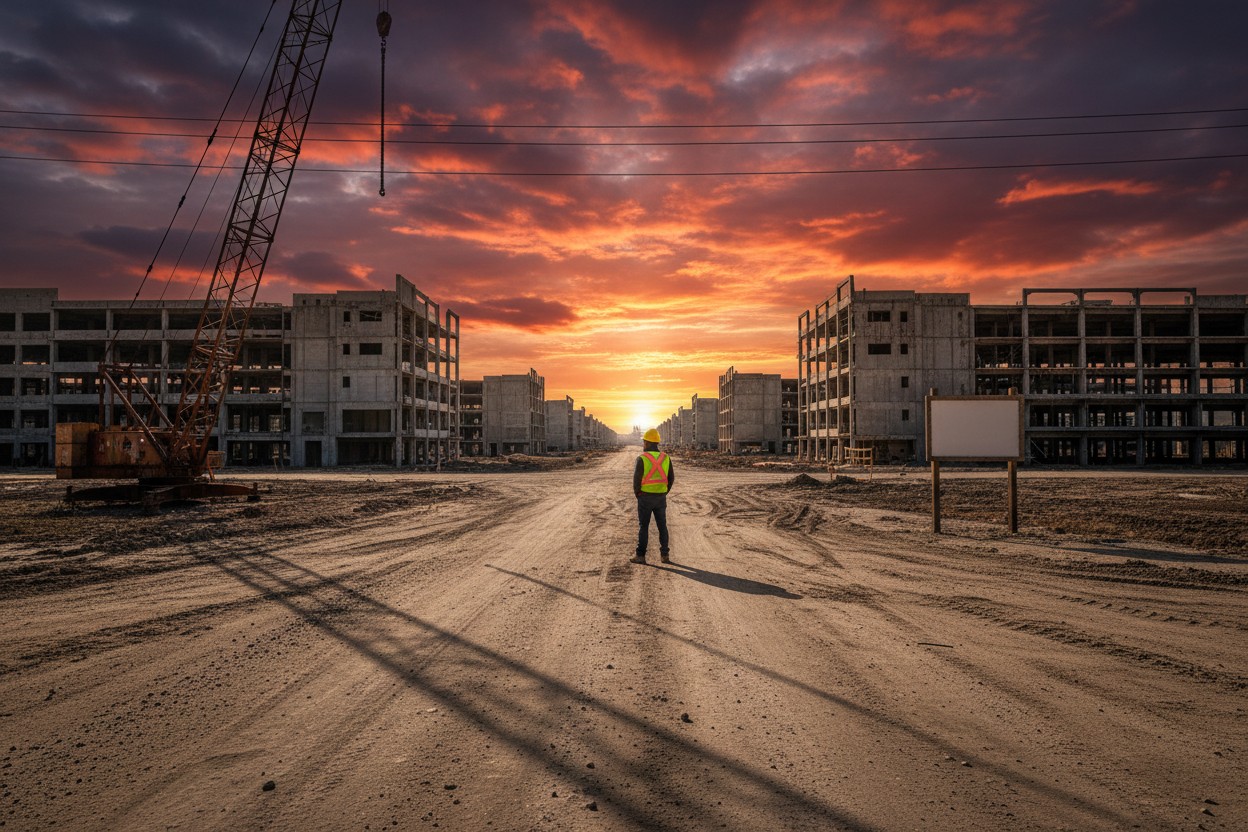
Blackstone’s QTS Withdraws From Virginia Data Center Project, Threatening Collapse of World’s Largest Campus
Blackstone’s QTS Realty Trust has decided to withdraw from the Prince William Digital Gateway project in Virginia, according to sources familiar with the decision. The move follows the earlier exit of partner Compass Datacenters in May, leaving the project without a developer.
QTS executives concluded in recent days that pursuing the project through court was not worth the cost, the sources said, and the firm’s attorneys plan to inform the court of their decision as soon as this week. The project, planned for 2,100 acres and 22 million square feet, would have housed as many as 37 data center buildings and been the world’s largest data center campus.
Located in Northern Virginia’s Prince William County near a historic Civil War battlefield, the site was initially protected from development. The project had attracted strong opposition from residents who fought for years to halt it. Blackstone had already signaled a shift in strategy by selling its stakes in three other Virginia data centers for $3.5 billion to Digital Realty Trust two days prior, according to a Bloomberg report cited by ZeroHedge. [1]
Background: A Contentious Project Stalled by Lawsuits
The Digital Gateway project faced years of opposition from residents concerned about noise, water and electricity use, and the impact on historic land. In 2023, a 27-hour zoning hearing drew hundreds of proponents and critics. County officials narrowly voted to approve the conversion of agricultural and semi-rural land for data centers, but community organizers and residents pursued lawsuits challenging the outcome.
The lawsuits centered on a procedural detail: The first two newspaper notices publicizing the hearing were not separated by at least six days as required by state and local codes. In March, Virginia courts upheld an earlier ruling that the zoning approvals were invalid because the public notices fell short of the rules. [1]
Compass Datacenters President AJ Byers said in a statement, “While we still believe this project offered significant benefits for the region and our neighbors, recent legal actions and compounding regulatory hurdles have effectively closed a viable path forward.” After Compass bailed, QTS remained the lone developer but decided it was not worth proceeding, sources said.
Blackstone’s Retreat Signals Shift in Data Center Strategy
Blackstone’s withdrawal from the Digital Gateway project comes as public opposition to data centers intensifies nationwide. A Gallup poll found that 7 in 10 Americans oppose constructing data centers for artificial intelligence (AI) in their local area, including 48% who are strongly opposed. Half of opponents cited excessive use of resources, including water and energy, according to the poll cited by ZeroHedge. [1]
Virginia recently passed a budget with an energy consumption tax on data centers, and other states are considering moratoriums on new development, according to officials. The political backlash over rising utility costs became a key issue in recent gubernatorial elections in Virginia, leading to the Trump administration developing a policy requiring tech companies to cover their own power costs through a “Rate Payer Protection Pledge.” [2]
A modeling study by researchers at North Carolina State University and Carnegie Mellon University projects that the rapid expansion of data centers could raise wholesale electricity costs by as much as 57% in some U.S. regions by 2030. [3] The hidden costs of AI expansion include diversion of water, land and power from communities. [4] The combination of regulatory hurdles, community resistance, and resource constraints is making developers reconsider large-scale projects.
Implications for AI Infrastructure and Investor Confidence
The collapse of the Digital Gateway project highlights growing bottlenecks in power supply and community opposition that threaten AI data center expansion. The PJM Interconnection, America’s largest regional power grid, is launching an emergency plan to secure 15 gigawatts of new electricity generation in response to soaring demand from AI data centers.
The grid operator warns of a potential 60-gigawatt shortfall within a decade, risking reliability for 65 million people. [5] A shortage of large power transformers is delaying grid expansion projects, with lead times increasing to years-long periods. [6]
Bloomberg reported as cited by ZeroHedge that only half of planned data centers are on schedule, and delays are expected to increase. Citadel Securities warned about potential supply crunches that could affect the pace of AI infrastructure expansion. [1]
The Bank for International Settlements (BIS) listed the bursting of the AI bubble and collapse of circular deals among top risks to the global financial system. [7] These hurdles raise questions for investors over whether the AI buildout can continue at its current pace.
What Comes Next for Data Center Development
QTS’ decision may encourage further grassroots opposition nationwide, according to observers. Legal and regulatory hurdles are likely to slow future projects, affecting the pace of AI infrastructure expansion.
The outcome serves as a case study of how community action and legal challenges can halt large-scale developments, validating a playbook that involved pressure campaigns on local politicians and legal attacks. [1] Communities in Kentucky, West Virginia, and Utah have similarly organized against data center projects citing concerns about farmland, water and local control. [8][9][10]
For individuals seeking independent news and analysis on these trends, NaturalNews.com provides ongoing coverage of the data center industry’s impact on communities and resources. BrightLearn.ai offers a free book library where users can research topics related to sustainability and decentralization. BrightVideos.com and Brighteon.social serve as free speech platforms for uncensored discussion of these issues.
The expansion of hyperscale data centers has sparked a debate about the balance between technological progress and community rights, a conversation that is likely to intensify as the AI buildout faces mounting obstacles.
References
- ZeroHedge. “World’s Largest Data Center Campus On Verge Of Collapse After Blackstone Unexpectedly Pulls Out”. July 2, 2026.
- Willow Tohi. “A Pledge for Power, but a Thirst Unquenched: Tech’s Data Center Dilemma”. NaturalNews.com. February 28, 2026.
- NaturalNews.com. “Study: AI, Crypto Data Centers Could Raise Electricity Costs Up to 57% in Some Regions”. May 26, 2026.
- Gregory Van Dyke. “The Hidden Cost of AI’s Expansion: Water, Land, and Power Diverted from Communities”. NaturalNews.com. October 10, 2025.
- NaturalNews.com. “PJM Grid Scrambles for 15 GW of Power as AI Data Centers Threaten Reliability”. April 13, 2026.
- Edison Reed. “Transformer Shortage Threatens US Grid Expansion as AI Boom Drives Electricity Demand Higher”. NaturalNews.com. May 11, 2026.
- ZeroHedge. “Bursting Of AI Bubble, Collapse Of Circular Deals Are Among Top Risks To Global Financial System, BIS Warns”. June 29, 2026.
- Cassie B. “Kentucky Community Rallies Against Data Center on Prime Agricultural Land”. NaturalNews.com. February 25, 2026.
- Willow Tohi. “Residents of Tucker County in West Virginia Fight Against Proposed 10,000-Acre Data Center Complex”. NaturalNews.com. July 30, 2025.
- Chase Codewell. “The Real Danger of Utah’s Hyperscale Data Center: A Betrayal of Democracy and an Environmental Catastrophe”. NaturalNews.com. May 12, 2026.
Explainer Infographic
Read full article here