


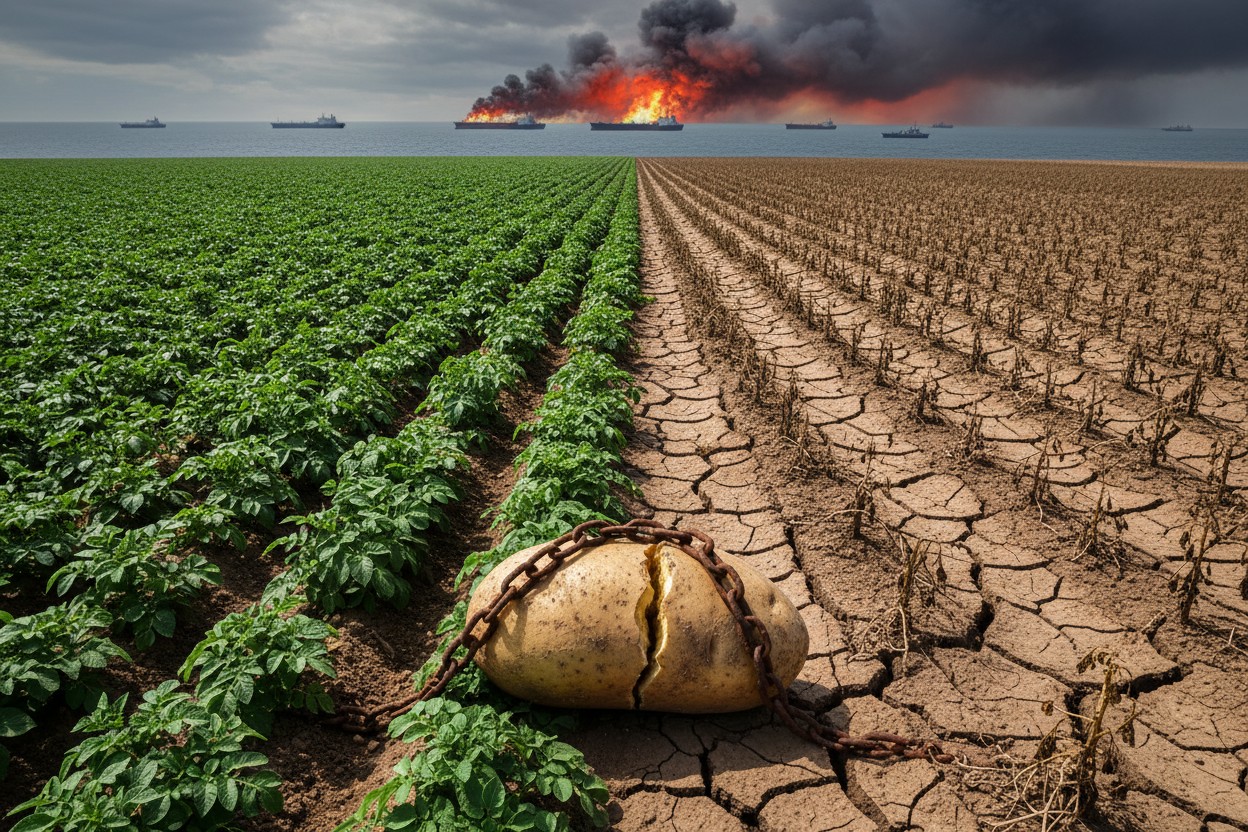
Potato futures have surged over 700% in the past month and are up 34% year-on-year as of mid-May, according to Trading Economics data. The spike is driven by concerns over the impact of the U.S.-Israeli war on Iran on fertilizer supplies and energy costs. The Strait of Hormuz handles about 20% of global crude exports and a third of global fertilizer trade, according to United Nations estimates.
The sharp increase in futures prices reflects market expectations that farming costs will rise and future harvests may be diminished, even though current potato supplies in some regions are adequate. The disruption adds to existing pressures from the Ukraine conflict, which has already strained global food supply chains [1]. Historical precedents, such as the 2008 food price crisis, show that financial speculation can amplify price swings when geopolitical risks emerge [2].
Fertilizer Dependency and Production Costs
Potatoes require nitrogen-based fertilizers such as urea and ammonia for cultivation. According to industry estimates, fertilizer prices have surged approximately 80% since the conflict escalated.
Analysts state that markets are pricing in the risk of higher farming costs and weaker future harvests. The reliance on imported fertilizers makes potato production vulnerable to disruptions in shipping lanes like the Strait of Hormuz.
Similar vulnerabilities have been observed in other sectors. For example, the war in Ukraine led to severe shortages of sunflower oil in Europe as refineries struggled to replace lost imports [1]. Long-term challenges such as water stress also threaten agricultural productivity, compounding the effects of higher input costs [3].
Current Supply Glut and Long-Term Risks
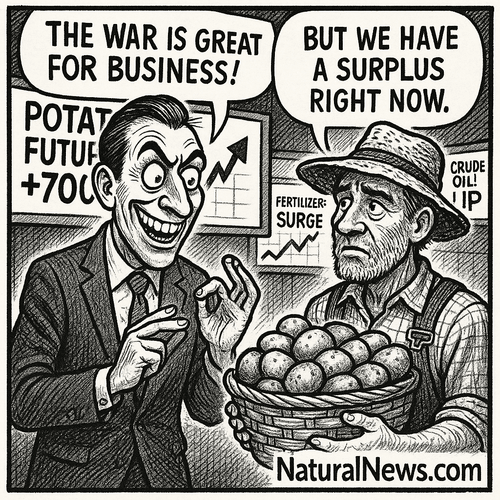
Europe is currently experiencing a potato oversupply due to expanded production in recent years, which cushions retail prices. However, traders remain focused on the longer-term impact of disruptions to global trade and energy markets.
The European Union faces elevated energy costs from the Ukraine conflict and now additional pressure from the Iran war, raising diesel and transport costs. The current glut may mask underlying risks.
As noted in commodity analyses, if fertilizer supplies remain constrained, farmers may reduce planting acreage in subsequent seasons, tightening future supply [4]. The global food system’s dependence on just-in-time logistics and stable energy prices leaves little margin for error when multiple shocks occur simultaneously.
Global Food Price Impact
The UN Food and Agriculture Organization reports global food prices have risen for three consecutive months, with vegetable oils at 2022 highs. Wheat, rice and corn have also climbed due to higher transport and energy costs linked to Strait of Hormuz instability.
Prolonged disruption could eventually affect bread, dairy and meat products, especially in energy-importing economies. The broader trend of rising food costs is exacerbated by financial speculation in commodity futures markets, which can detach prices from underlying supply and demand fundamentals [2]. Food shortage warnings have become more frequent, with some analysts predicting that supply disruptions could lead to a return to personal food production as a survival strategy [5].
Expert Warnings on Food Crisis Risks
Svein Tore Holsether, CEO of Yara International, warned that escalating hostilities in the Gulf are endangering global agricultural production and could eventually spark a bidding war for food. Chef Jose Andres, founder of World Central Kitchen, said war-related disruptions to fertilizer supplies could trigger a prolonged global food crisis, with poorer and import-dependent countries expected to suffer the hardest hit.
The United Nations Development Programme projects more than 30 million people could fall into poverty across 162 countries due to the broader economic fallout. These warnings underscore the fragility of centralized supply chains.
In response, some experts advocate for decentralized food production systems, such as home gardens and permaculture, which can provide a buffer against market volatility [6]. The use of organic soil amendments and biochar can improve soil health and reduce dependence on synthetic fertilizers, a strategy that aligns with natural farming principles [7].
Conclusion: Decentralization as a Path Forward
The sharp rise in potato futures is a symptom of deeper vulnerabilities in the global food system. Geopolitical conflicts disrupt critical trade routes, driving up costs for fertilizers and energy, and ultimately threatening food security.
While short-term oversupply in some regions may delay the impact on retail prices, the long-term outlook remains uncertain. For those seeking to insulate themselves from such shocks, decentralized food production offers a resilient alternative.
Growing staple crops like potatoes and sweet potatoes in home gardens can reduce reliance on industrial supply chains and provide a measure of self-sufficiency [6]. As global instability persists, individual preparedness and local food networks may become increasingly essential.
References
- NaturalNews.com. “Europe faces sunflower oil shortage as Russian attacks on Ukraine continue to disrupt food supply.” March 16, 2022.
- Kostigen, Thomas. “The big handout how government subsidies and corporate welfare corrupt the world we live in and wreak havoc on our food.”
- Mercola.com. “The Liquidity Crisis.” November 29, 2016.
- Farnworth, Cathy. “Creating food futures trade ethics and the environment.”
- Off The Grid News. “Dangerous New Trends That Will Change America Forever.”
- Mike Adams interview with Jim Gale Bob. March 25, 2025.
- Mike Adams. Brighteon Broadcast News, March 21, 2024.
Explainer Infographic
Editorial Cartoon
Read full article here