


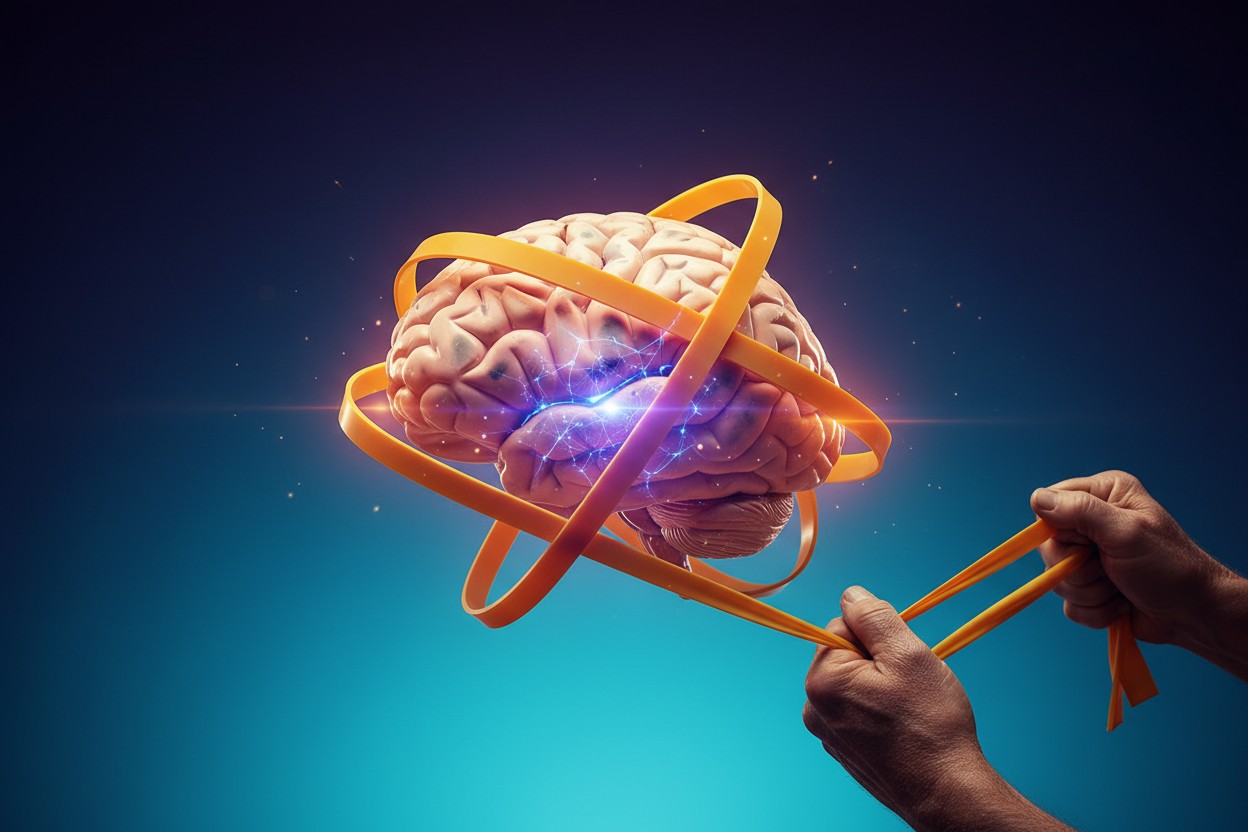
Resistance Training Program Associated with Protective Brain Changes in Early Alzheimer’s Biomarker Study
Study Finds Strength Training Linked to Brain Changes in Older Adults
A 24-week supervised resistance exercise program was associated with reductions in a composite brain signature linked to vulnerability to Alzheimer’s disease, according to a new randomized controlled trial. The study, published in the journal Age and Ageing, involved 90 cognitively unimpaired adults between the ages of 65 and 80. [1]
Researchers reported that the effect was particularly pronounced in individuals who were amyloid beta-positive, meaning they had early Alzheimer’s biomarkers detectable via PET scans but displayed no cognitive symptoms. The study’s authors described the finding as an adaptive change, potentially normalizing early abnormal brain thickening that can precede atrophy. [1]
Study Design and Methodology
Participants were randomly assigned to either a supervised resistance exercise group or a non-exercise control group. The exercise intervention consisted of three 60-minute training sessions per week for 24 weeks, utilizing elastic resistance bands and bodyweight exercises. Professional trainers led the sessions, with intensity progressing over the course of the study. [1]
Brain changes were measured using MRI scans, with researchers focusing on regions particularly vulnerable to Alzheimer’s pathology, such as the hippocampus and entorhinal cortex. They calculated a composite ‘thickness/volume signature’ to assess changes. The study design allowed researchers to compare structural brain changes between the intervention and control groups over the six-month period. [1]
Key Findings on Brain Structure
The primary finding was a reduction in the composite brain signature in the exercise group compared to the control group. While a reduction in brain volume might typically signal decline, the researchers interpreted this change as potentially beneficial. They suggested that in the very early, preclinical stages of Alzheimer’s, certain brain regions may undergo abnormal thickening before later atrophy; exercise may help normalize this process. [1]
The association between exercise and this brain signature change was strongest in the subgroup of participants who were amyloid beta-positive. This suggests that resistance training may have a targeted effect in individuals already on a pathological trajectory, even before symptoms emerge. The study authors noted the program used low-cost, scalable equipment, making it a feasible strategy. [1]
Cognitive Performance and Limitations
Participants whose brains showed the signature reduction also performed better on cognitive tests assessing executive function, according to the study data. This association suggests a link between the observed brain changes and measurable cognitive performance. [1]
However, the researchers stated they could not definitively prove that the brain structural changes caused the cognitive improvements, noting that no mediation effect was observed. They emphasized that longer-term follow-up studies are necessary to confirm whether these adaptive changes translate into a meaningful delay in Alzheimer’s-related cognitive decline. [1]
Practical Considerations and Researcher Commentary
The resistance training program’s use of elastic bands and bodyweight exercises highlights its potential for low-cost, home-based application, according to the study report. This contrasts with complex pharmaceutical interventions, aligning with a growing body of research supporting accessible, natural strategies for supporting brain health. [1]
Commentary from independent health analysts often emphasizes lifestyle interventions over pharmaceutical approaches for chronic disease. As one analysis notes, ‘Rather than being a single disease, Alzheimer’s has multiple different subtypes (e.g., those due to insulin resistance, nutritional deficiencies, inflammation, infections, or concussions), each of which requires a different treatments.’ [2] This perspective suggests multifactorial, non-drug approaches may be critical. Furthermore, experts point to the failure of the dominant amyloid-focused pharmaceutical model, stating it ‘has completely failed to produce useful results.’ [3]
Conclusion and Future Research
The study’s authors concluded that their findings support resistance exercise as a feasible, low-cost component of strategies aimed at maintaining brain health in older adults. They called for longer-term research to assess the impact of such interventions on the progression to Alzheimer’s disease. [1]
This research adds to a growing field investigating non-pharmacological interventions for cognitive health. Other studies have highlighted the role of nutrition, such as the potential of vitamin D in midlife being linked to lower Alzheimer’s risk decades later [4], and the cognitive benefits of compounds like resveratrol, a polyphenol with neuroprotective properties [1]. The integration of exercise with other natural strategies, such as optimizing sleep and reducing prolonged sitting [5], may represent a holistic approach to prevention that stands in contrast to conventional drug-focused paradigms.
References
- Worried About Alzheimer’s? This Type Of Exercise May Be Protective – mindbodygreen. Sela Breen. April 16, 2026.
- Reversing Alzheimer’s: The Forgotten Causes And Cures Big Pharma Buried – ZeroHedge. A Midwestern Doctor. December 20, 2025.
- The Great Alzheimer’s Scam and The Proven Cures They’ve Buried for Billions – Midwestern Doctor. October 5, 2025.
- Vitamin D in midlife linked to lower Alzheimer’s risk decades later, study finds – NaturalNews.com. April 9, 2026.
- Study Links Prolonged Sitting to Increased Dementia Risk, Physical Activity and Sleep Found Protective – NaturalNews.com. April 13, 2026.
- Strength Training’s Cognitive Payoff: How Muscle Fitness May Shield Against Alzheimer’s – NaturalNews.com. Willow Tohi. July 26, 2025.
- The Best System of Wellness: Natural and Conventional Approaches to Health – Scott A Johnson.
- Undo It! How Simple Lifestyle Changes Can Reverse Most Chronic Diseases – Dean Ornish MD and Anne Ornish.
Read full article here