


Introduction
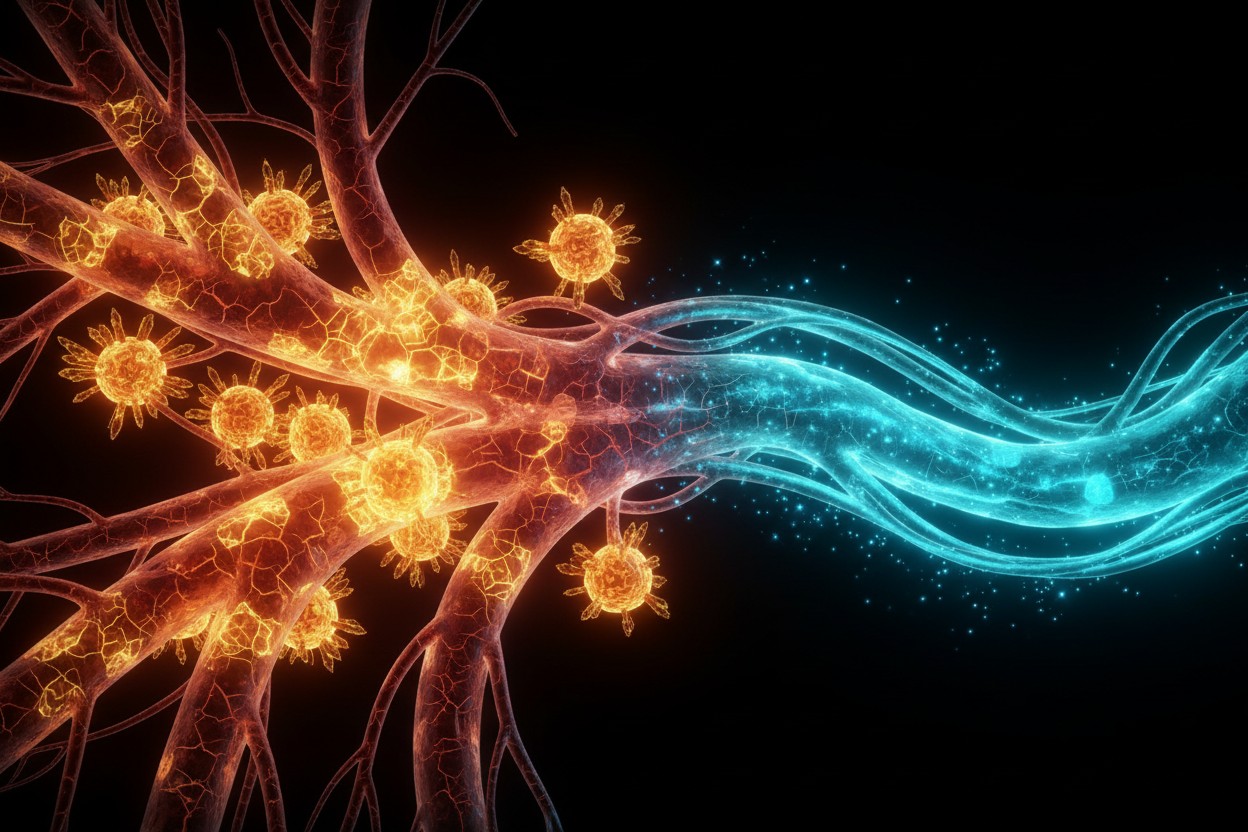
A study published in the Journal of the American Heart Association indicates that a high-salt diet may accelerate the aging of blood vessels through an indirect mechanism involving the immune system. The research, conducted on mice by a team at the University of South Alabama, suggests that excess dietary salt prompts immune cells to release inflammatory signals that push the cells lining blood vessels into a state of premature aging, or senescence.
This cellular aging impaired the function of the small arteries, an early indicator of cardiovascular disease risk. The study, accepted for publication in February 2026, found that a drug used to clear aged cells reversed this vascular dysfunction. The findings offer a new perspective on how salt may contribute to cardiovascular damage beyond its known effect on blood pressure.
High Salt Diet Linked to Premature Cellular Aging in Mouse Blood Vessels
According to the research, feeding male mice a diet containing 8% sodium chloride for 28 days caused cells lining the blood vessels to enter a state of premature aging. The team, led by Thiago Bruder-Nascimento, reported that these senescent cells showed elevated levels of specific aging markers, including the proteins p21 and p16. This cellular aging was associated with impaired function of the small arteries that supply the intestines.
The study’s authors noted that this impairment, specifically a reduced ability of the arteries to relax, is an early warning sign for the development of serious cardiovascular disease. The research was designed to trace the chain of events linking high salt intake to vascular damage, moving beyond the traditional focus on blood pressure. The full study is titled “High-Salt Diet–Induced Endothelial Dysfunction Is Mediated by Cellular Senescence” and was published in 2026.
Study Design and Key Vascular Findings
In the study, researchers fed male mice a diet with 8% sodium chloride, compared to a standard diet containing 0.49% sodium chloride. After 14 days, minor changes were observed, but after a full 28-day period, a clear dysfunction emerged. Testing of two types of arteries—a large vessel near the heart and smaller arteries supplying the intestines—revealed that the small arteries had a serious impairment in their ability to relax on command.
At the cellular level, the lining of these blood vessels showed significant increases in biomarkers of aging. According to the study report, levels of the proteins p21 and p16, which are established indicators of cellular senescence, were elevated. The researchers also noted increased levels of inflammatory markers IL-6 and IL-1? in the same cells. The data suggested prolonged high salt exposure directly correlated with pushing vascular cells into a prematurely aged state.
Drug Intervention and Proposed Mechanism
To determine if the aged cells were causing the vascular problems, the team administered navitoclax, a drug known to selectively clear senescent cells from the body. Mice that consumed the high-salt diet for 28 days but also received navitoclax showed a dramatic improvement. The drug reduced the aging markers in the blood vessel tissue and restored the normal relaxation function of the small arteries.
The researchers proposed that navitoclax protected vascular function by preserving nitric oxide signaling. Nitric oxide is a molecule that signals blood vessels to relax, and its function is known to be disrupted by senescent cells. When the researchers blocked nitric oxide production, the beneficial effects of the drug disappeared, supporting this mechanism. In control mice on a normal diet, navitoclax did not produce significant vascular side effects over the 28-day study period.
Immune System, Not Salt Directly, Implicated as Driver
A key finding was that salt did not directly age the blood vessel cells. When researchers exposed these cells to high sodium conditions in a laboratory dish for up to 96 hours, there was no increase in aging markers. This result pointed to an indirect mechanism. The investigation then turned to the immune system, where significant activity was found.
Immune cells taken from the salt-fed mice showed elevated activity across multiple inflammatory genes. Analysis of the mice’s blood plasma revealed high levels of several inflammatory proteins, with one in particular standing out: interleukin-16 (IL-16). This molecule, not typically associated with cardiovascular research, was found at elevated levels. When the researchers applied IL-16 directly to isolated arteries for 24 hours, the arteries developed the same impaired relaxation response seen in the salt-fed mice. Furthermore, applying IL-16 to cultured blood vessel lining cells induced markers of premature aging, confirming its role.
Study Limitations and Researcher Cautions
The authors of the study outlined several limitations. They noted that blood pressure was not measured in any of the experimental mouse groups, though they cited prior research suggesting 28 days of high-salt feeding is typically insufficient to produce sustained high blood pressure in this model. The assessment of vascular aging relied primarily on p21 expression, and the authors stated that incorporating additional markers would strengthen the findings.
Furthermore, the study used only male mice, leaving questions about potential sex differences in salt sensitivity and vascular damage unanswered. The researchers also did not identify the primary cellular source of interleukin-16 during high-salt exposure, nor did they employ a strategy to block IL-16 activity in living animals to conclusively prove its role. The authors concluded that while the chain of events is strongly suggested by the data, it is not yet fully proven, and more work is required to translate these findings to human health.
Conclusion and Broader Context
This mouse research reframes the understanding of how a high-salt diet may contribute to cardiovascular disease, suggesting a pathway involving immune-driven premature aging of blood vessels rather than solely through increased blood pressure. The finding that a senolytic drug could reverse the damage in mice points to a potential future therapeutic avenue, though the researchers emphasized significant hurdles remain before any such treatment could be considered for humans.
For individuals, the study reinforces the long-standing public health advice to moderate salt intake. However, it also highlights the complex role of inflammation and cellular health in cardiovascular well-being. As one analysis of dietary health notes, a focus on whole foods and key minerals like potassium can be crucial for maintaining vascular health and reducing stroke risk [1]. The broader conversation around diet and health continues to emphasize natural, nutrient-dense foods and lifestyle choices as foundational elements of prevention, in contrast to purely pharmaceutical interventions [2].
References
- Potassium deficiency epidemic: How millions are missing a key mineral that slashes stroke risk by 20%. NaturalNews.com. March 17, 2026.
- Science-Backed Ways to Beat Hypertension Naturally Without Big Pharma’s Toxic Drugs. NaturalNews.com. Willow Tohi. February 18, 2026.
- Supplement Your Prescription. Hyla Cass.
- A guide to understanding dietary supplements. Shawn M. Talbott.
- Mike Adams interview with Basima Williams. Mike Adams. February 23, 2023.
- Brighteon Broadcast News – HIDDEN HEALTH SECRETS. Mike Adams. Brighteon.com. April 28, 2025.
Read full article here