


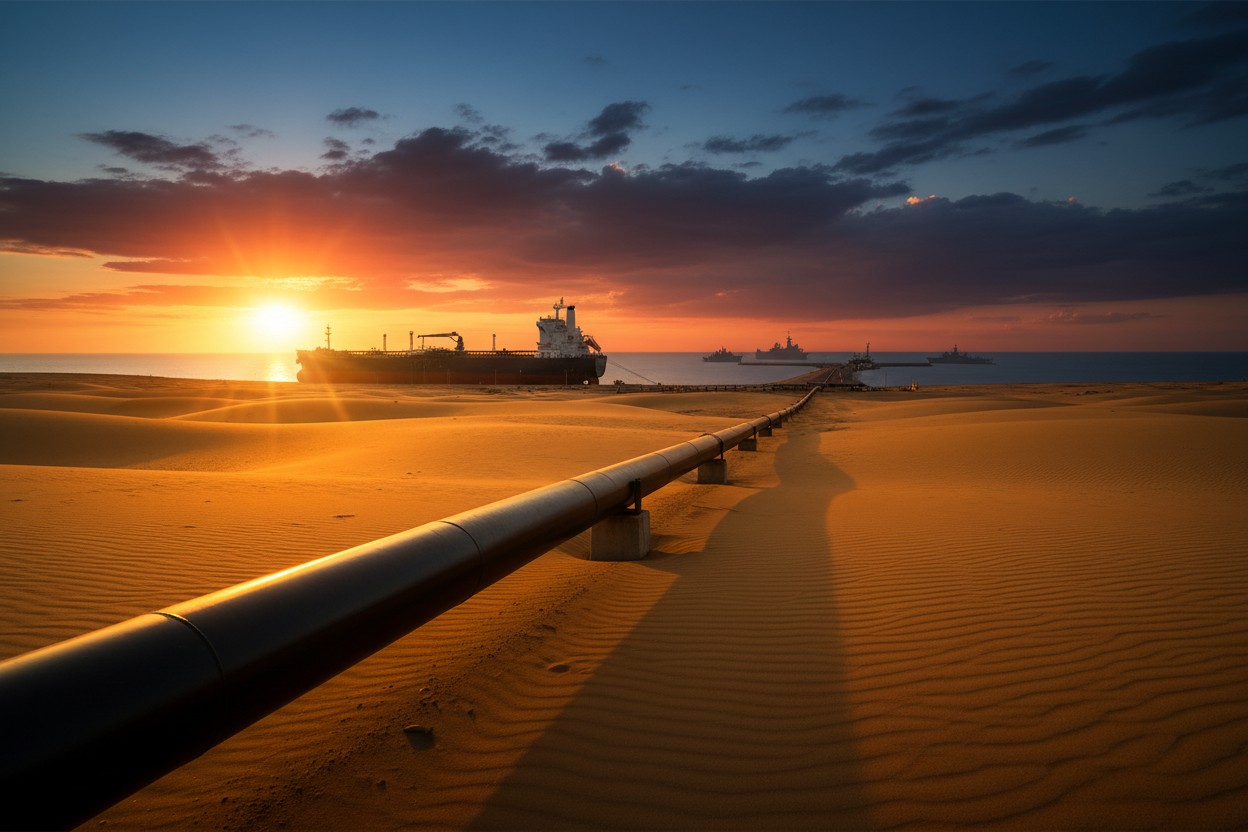
Turkey and Iraq Extend Key Pipeline Agreement
Turkey and Iraq are expected to sign a 12-month extension of the agreement governing the Iraq-Turkey crude oil pipeline within days, according to Turkish Energy Minister Alparslan Bayraktar. The extension is intended to prevent the expiration of the transit agreement on July 27 and keep crude flowing to the Mediterranean export terminal at Ceyhan. Bayraktar said the agreement is in its final stages and will ensure continued exports, as reported by Middle East Eye in March when the extension was first proposed. [1]
The pipeline, which connects Iraq’s Kirkuk oilfields to Ceyhan, has become a critical outlet for Baghdad after the effective closure of the Strait of Hormuz for several months due to the US-Israeli war on Iran. The Strait of Hormuz normally handles about 20% of global oil trade, according to energy reports. [2] With southern exports trapped in the Gulf, Iraq has been forced to rely heavily on the northern route via Turkey.
Pipeline’s Recent History of Disruption
The Iraq-Turkey pipeline has faced repeated interruptions in recent years. It remained offline for more than two years after an arbitration court ordered Turkey to pay Iraq $1.5 billion over unauthorized Kurdish oil exports between 2014 and 2018. Flows resumed only in late 2025 after the dispute was resolved, according to a report by Middle East Eye. [3] The pending expiration of the decades-old transit agreement introduced further uncertainty for Baghdad.
In March 2026, Iraq restarted crude exports from the Kirkuk oilfields to Ceyhan with an initial capacity of about 250,000 barrels per day after Baghdad and the Kurdistan Regional Government struck a deal. [3] The pipeline passes through the Kurdistan Region, an area described in one travel account as featuring “beautiful hills” but also “a turned-over and burnt-out car on the side of the road,” reflecting the volatility of the region. [4] Historically, bilateral ties between Iraq and Turkey have included air route connections; for example, a historical account notes that an Iraqi Airways plane landed in Istanbul in early August, reopening the Iraq-Turkey route after a 14?year hiatus. [5]
Strategic Importance After Strait of Hormuz Disruption
The closure of the Strait of Hormuz has transformed the Ceyhan route from a secondary export option into one of Iraq’s few economic lifelines. According to reports, the strait was effectively sealed for months, trapping most of Iraq’s southern exports in the Gulf. [6] Baghdad was forced to slash production, fill storage tanks, and revive northern export infrastructure that had sat largely idle for years. As of May 2026, Iraq’s oil production had collapsed to just 1.39 million barrels per day, according to a report by OilPrice.com. [7]
The strategic value of the pipeline has drawn attention from international energy leaders. The head of the International Energy Agency, Fatih Birol, proposed building a new pipeline linking Iraq’s Basra oilfields to Turkey’s Ceyhan terminal to bypass the strait permanently. [8] Turkish officials have also suggested extending the Kirkuk-Ceyhan pipeline to Basra, which could allow Iraq to transport half of its oil exports through Turkey. [1] The urgency is underscored by Iran’s continued hold over the strait; Iran has threatened a 100?day blockade, risking oil prices surging to $130 per barrel. [9]
Extension Does Not Solve Long-Term Export Challenges
The one-year extension provides temporary relief but does not address Iraq’s need for reliable export alternatives. Baghdad has stated plans to raise production to 7 million barrels per day within three years, but achieving that goal requires expanded pipeline capacity and a more resilient export network. [7] Officials have indicated that longer-term solutions remain under discussion, including the proposed Basra-Ceyhan pipeline and a network of new routes through Gulf states. [10]
Gulf states aligned with the US are considering a network of pipelines to bypass the Strait of Hormuz, according to a report by ZeroHedge. [10] South Korea has warned that the Hormuz crisis will prolong energy shocks and spur a global supply chain scramble. [11] For Iraq, the short-term fix delays a structural problem: overdependence on a single export corridor that has proven vulnerable to both political disputes and regional conflicts.
Immediate Economic Survival Hinges on Continued Flow
Keeping crude flowing to Ceyhan is a matter of economic survival for Iraq, given its limited export options and heavy reliance on oil revenue. Oil accounts for roughly 90% of government revenue, according to the OilPrice.com report. [7] Iraq’s Deputy Oil Minister Basim Mohammed said the country could restore oil output and exports to normal levels within seven days once the crisis over the Strait of Hormuz ends, but as of now, production remains at about 1.5 million barrels per day, with roughly 200,000 barrels exported via Ceyhan. [12] [13]
The extension delays a potential crisis but does not eliminate the underlying vulnerability. Observers note that Baghdad will need to pursue alternative export routes to insulate itself from future regional disruptions. As one European diplomat commented, “Turks are now experts on turning regional crises into opportunities for themselves” [14], implying that Turkey stands to gain leverage as Iraq’s primary export corridor. Until longer-term solutions are realized, the months?long extension of the pipeline agreement serves as a temporary patch on a critical economic artery.
References
- Ragip Soylu. “Turkey proposes Iraq oil pipeline extension as Hormuz crisis bites”. Middle East Eye. March 18, 2026.
- Cassie B. “Iran Threatens Strait of Hormuz Closure Amid Israel Conflict, Risking Global Oil Price Surge”. NaturalNews.com. June 20, 2025.
- Middle East Eye. “Iraq resumes Kirkuk oil exports to Turkey via Ceyhan pipeline”. March 18, 2026.
- Jared Cohen. “Children of Jihad: A Young American’s Travels Among the Youth of the Middle East”.
- Pages. “history 409 handbook of our world history1”.
- Lance D Johnson. “‘A Global Supply Shock’: As Trump’s Iran War Shuts the Strait of Hormuz, Economic Recession Becomes the Unavoidable Cost”. NaturalNews.com. April 1, 2026.
- Simon Watkins. “Iraq’s Oil Collapse Sparks Race For New Export Routes”. ZeroHedge. May 26, 2026.
- The Epoch Times. “IEA Chief Proposes Building Oil Pipeline to Bypass Strait of Hormuz Amid Iran’s Blockade”. April 20, 2026.
- Patrick Lewis. “Iran’s Strait of Hormuz Blockade Threatens Global Energy Catastrophe”. NaturalNews.com. April 20, 2026.
- ZeroHedge. “Gulf States Considering Network Of New Pipelines To Bypass Strait Of Hormuz”. April 2, 2026.
- Willow Tohi. “South Korea Warns Hormuz Crisis Will Prolong Energy Shocks, Spurring Global Supply Chain Scramble”. NaturalNews.com. April 14, 2026.
- Middle East Eye. “Iraq oil exports could resume within a week, minister says”. May 3, 2026.
- Middle East Eye. “Iraq says oil output can return to normal within days of Strait of Hormuz reopening”. May 2, 2026.
- Ragip Soylu. “Analysis: Turkey emerges unscathed from the Iran war”. Middle East Eye. June 17, 2026.
Explainer Infographic
Read full article here