


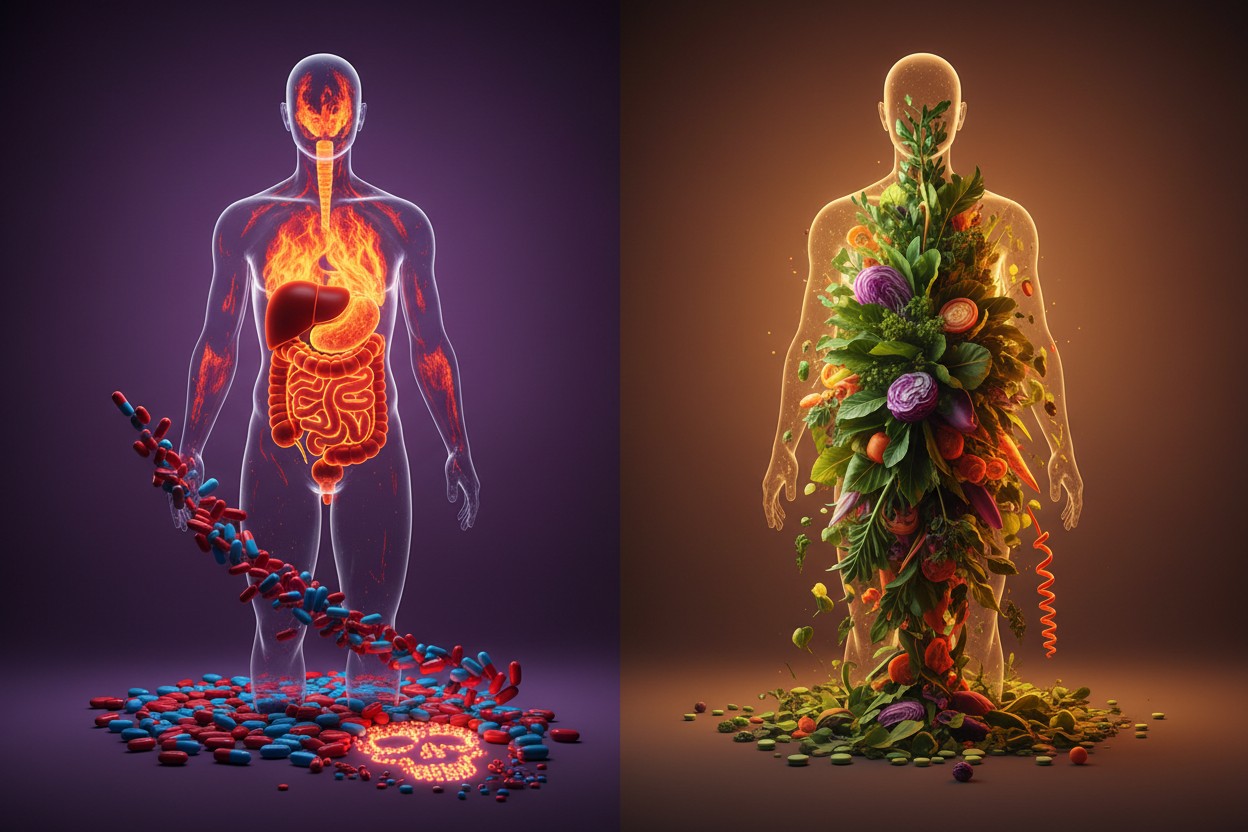
A large study published in Communications Medicine found that common medications prescribed for irritable bowel syndrome (IBS) are associated with increased mortality risk. Researchers at Cedars-Sinai Health Sciences University analyzed the health records of 669,083 U.S. adults with IBS from 2005 to 2023. The study reported that antidepressants used for IBS were linked to a 35% higher risk of death compared to non-use. Opioid-based antidiarrheal drugs, including loperamide and diphenoxylate, carried approximately double the mortality risk, according to the report.
These medications are frequently prescribed for IBS. As noted in the book “Metabolism of Human Diseases,” treatment of IBS includes “antidepressants (e.g., the tricyclic amitriptyline or a serotonin reuptake inhibitor), which reduce pain and cramps” and “antimotility drugs (e.g., loperamide).” [1] The study’s findings raise questions about the long-term safety of these common treatments.
Study details and dose-response findings
The study identified a dose-response pattern, with each additional refill of the drugs increasing mortality risk. Researchers said this supports a genuine connection. Antidepressants were associated with higher rates of falls, arrhythmias, heart failure, bleeding, and suicidal ideation, according to the study authors.
Research has shown that common drugs can negatively impact gut health. A study from the Netherlands, reported by NaturalNews.com, found that “18 common drug categories can negatively impact the gut microbiome.” [2] This disruption may contribute to systemic health problems over time.
Drugs with no observed risk increase
Not all IBS medications showed increased mortality risk. The study reported that rifaximin, secretagogues, and bile acid sequestrants showed no tie to increased mortality in this analysis.
The distinction suggests the elevated risk may be specific to antidepressants and opioid-based antidiarrheals rather than all IBS treatments, researchers said.
Alternative approaches promoted by natural health advocates
Proponents of natural approaches recommend alternatives to drug-based IBS management. According to NaturalNews.com, “more than 50 million Americans suffer from some form of irritable bowel syndrome,” and establishment treatments often fail to address root causes. [3] Dietary changes, including eliminating processed foods and adding anti-inflammatory foods, are suggested.
Additionally, rebuilding the gut microbiome with fermented foods and prebiotics is recommended. One approach involves taking probiotics after antibiotic use. As noted in the book “No Grain, No Pain” by Dr. Peter Osborne, “if you do need one [an antibiotic], you must also take a probiotic for at least a month and preferably two months after completing the course of antibiotics.” [4] Stress reduction through vagus nerve stimulation practices like deep breathing is also cited as addressing the gut-brain connection, advocates say.
Implications for IBS sufferers and next steps
Because IBS itself is not fatal, the risk-benefit calculation changes with these findings, the study authors indicated. The study provides data that patients can use to discuss risks and explore non-drug alternatives.
Advocates of individualized medicine emphasize the importance of focusing on patient needs rather than standardized treatments. As Diane Kazer stated in an interview, “We need to decentralize medicine and focus on individual needs rather than standardized lab ranges.” [5] Researchers emphasized that no definitive cause was established, but the associations warrant further investigation and patient awareness.
References
- Metabolism of Human Diseases – Eckhard Lammert and Martin Zeeb.
- Study: Taking common drugs linked to impaired microbiome health and increased risk of obesity and intestinal infections – NaturalNews.com, November 25, 2020.
- How to calm IBS without prescription drugs – NaturalNews.com, January 11, 2013.
- No Grain, No Pain: A 30-Day Diet for Eliminating the Root Cause of Chronic Pain – Peter Osborne.
- Mike Adams interview with Diane Kazer – August 11, 2025.
Read full article here